How to Make Reading Fun for High Schoolers
Within: Is your selection reading programme feeling dried? Are the independent reading activities falling flat? Nosotros can engage students and proceed volume beloved fresh by weaving in new ideas from time to time!
Contained reading programs can exist the life of your English Language Arts classroom party. Books truly tin can be magical for students and teachers to share together and to read independently. When inspiring stories are ubiquitous in our classrooms, vibrant discussions help to strengthen the overall community and culture.
Whether you lot're only dipping your toes into independent reading or looking for means to freshen upwardly your existing approach, you'll find lots of ideas here! If you've been around my blog or my Instagram account for long, y'all probably already know my stiff distaste for reading logs and accelerated reader. Compliance-driven accountability tools create a negative infinite betwixt students, books, and teachers.
In this post, you won't find unnecessary strategies that frustrate or bore readers. Instead, you'll find over a dozen fresh ideas for bringing healthy discussion and community to your independent reading program.
Previously, I've written about assignments we tin utilise to assess students' progress with reading literature standards when information technology comes to their independent reading books. But, beyond standards assessment, I find footling to no value in layers of accountability that feel similar work just so we can "brand sure" students are reading.
If we institute a positive reading culture, students will read. Let's check out the activities. Keep in mind, y'all won't observe predictable, structured hawker type approaches hither. I like to keep it fresh because that'southward my style. Also, variety drives away colorlessness and unleashes creativity.
For the purpose of clarification, independent reading refers to when students are reading a book of their own choosing. They may be using an audiobook or fifty-fifty sharing the book with parents, simply students are reading the book either in class or at home considering it's a book they have chosen to read. Typically, this work is a meaningful extension of additional required classroom texts.
ane: Entrance QUESTIONS
Entrance questions can be a fun way to open up thinking. We can pose these questions when students walk into class or after independent reading time. The purpose of an entrance question is to get students talking about their books, which contributes to a social reading environment. Indirectly, students will exist getting ideas of books they may want to read in the future, and those who are answering the questions will exist reflecting on what they are currently reading.
Consider these possible examples:
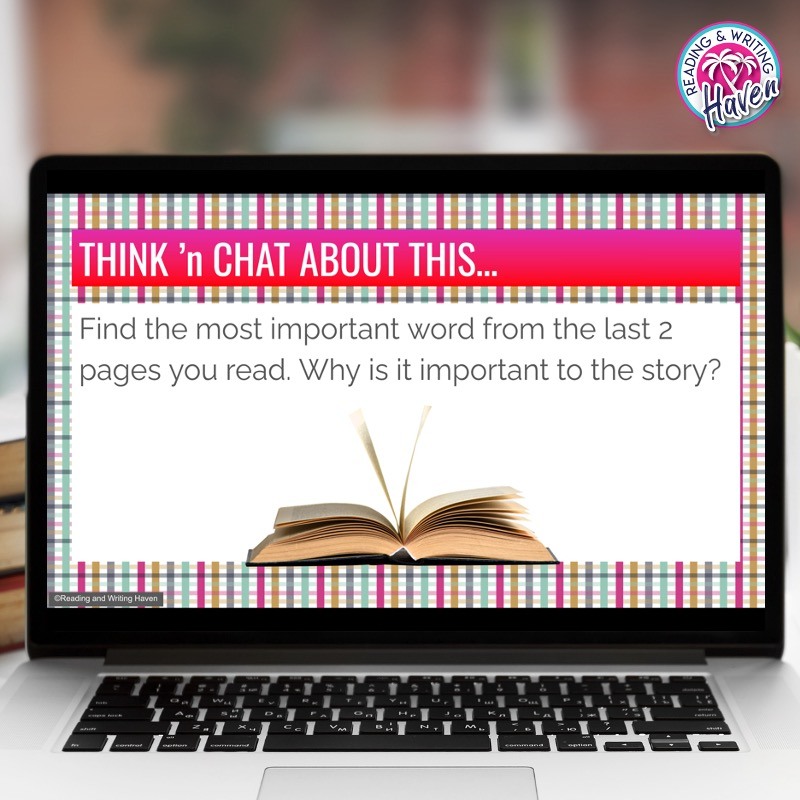
- Find the most important word from the last 2 pages you read. Why is it important to the story?
- What is the setting of your volume? Does the protagonist enjoy living in this setting? How do you know? How does the setting cause limitations or provide freedom for the characters?
Archway questions provide a thin layer of accountability. Students who are not reading their books volition have a difficult fourth dimension coming up with authentic answers to the prompts.
You tin detect more entrance prompts similar this here .
2: SKILL APPLICATION
1 of the all-time ways nosotros can bridge the gap between whole class texts and independent reading activities is to inquire students to employ the skills we are teaching in a whole-group setting to their selection reading books.
For example, if yous teach students a five sentence summary strategy using a curt whole-class text, ask them to apply their summarizing skills to their independent reading book. Analyzing figurative language as a grade? Why non extend that practice to independent reading? Making inferences almost characters? Same matter.
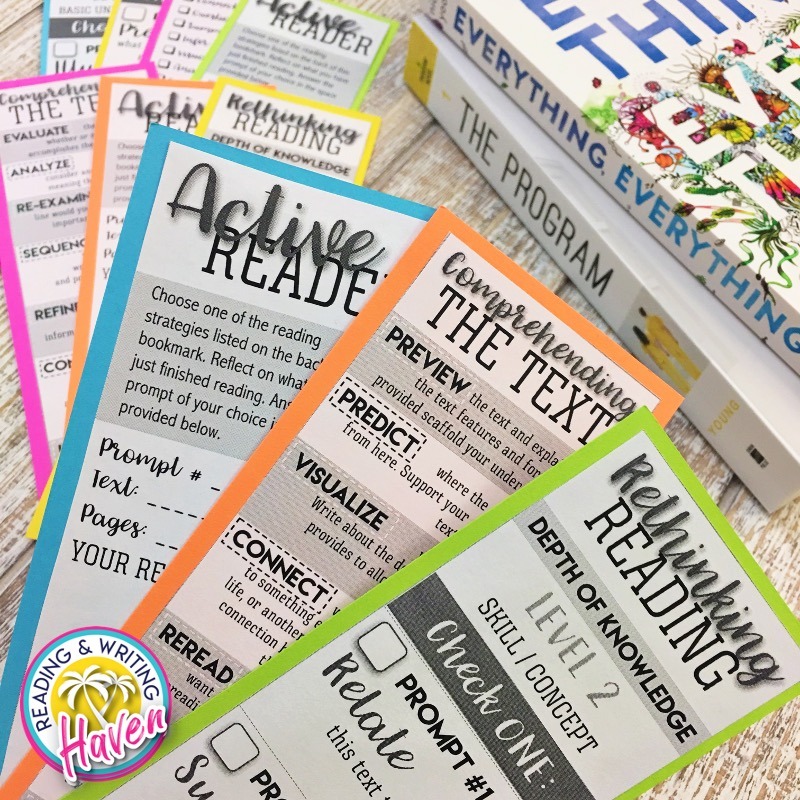
I like to apply scaffolding tools like graphic organizers and bookmarks to make a seamless connection between whole-class texts and contained reading books. I recommend modeling with the aforementioned tools students will exist using on their own.
Reluctant readers volition be more likely to invest in their contained reading books if they feel the books are an of import role of their learning process.
3: READING CONFERENCES
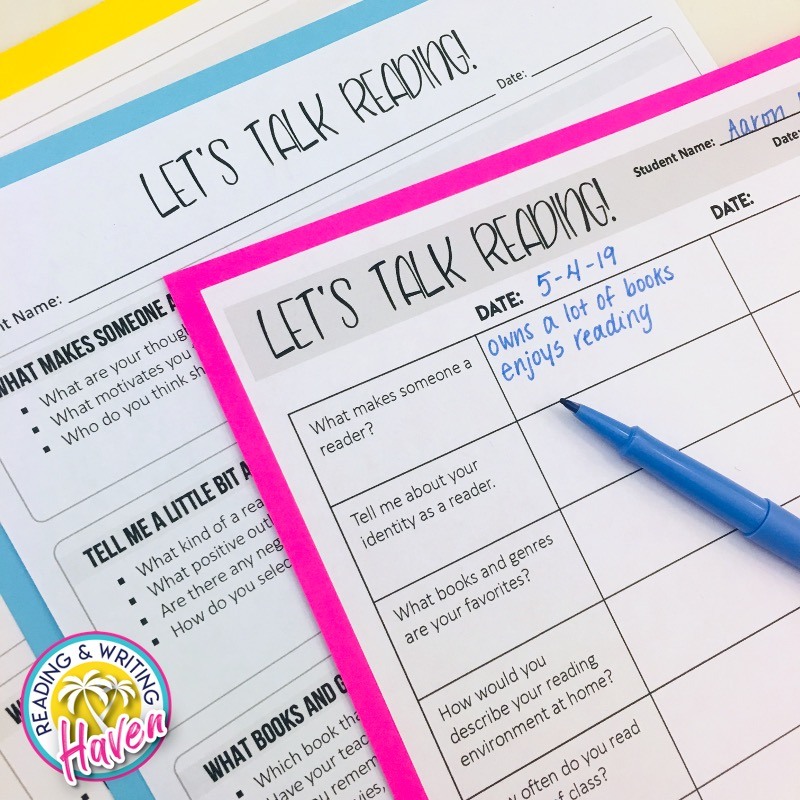
Reading conferences are opportunities to get to know readers. During a true reading conference, the teacher sits with each pupil to have quick conversations near how students are approaching their independent reading books. We can ask students summary questions, inference questions, assay questions, and more than.
Reading conferences are another opportunity to bridge the lessons and skills we are working on equally a whole class with the books students are reading on their own. Many secondary teachers stray away from reading conferences considering we take so many students and a short corporeality of fourth dimension to meet with them.
I've used five-minute reading conferences during contained reading time. This means I am able to conference with two students each day, and it takes me two to iii weeks to make it through the whole educatee roster. That's okay! Coming together with students one-on-i allows us to differentiate the reading skills and strategies we desire them to work on, and it helps to build relationships with them.
Plus, if we tin tell they aren't really engaging with their book, we can utilize this time to help them find a volume they will savour more than.
If you aren't fix to cover the one-on-one reading conferences approach, requite small group conferences a try! Run across with iii to iv students at a time to discuss a reading strategy (predicting, inferring, visualizing). We can talk about how dialogue impacts pace or how the writer uses figurative language to appoint readers.
iv: Book Bank check-INS
In Reading in the Wild, Donalyn Miller recommends a status of the class, which is where we bear upon base with each educatee to inquire most their reading progress. When I say your proper name, share out what page you're on and something interesting about your reading! We can practice this while conferring one-on-i, when taking attendance, as nosotros circulate the room during independent reading, or in pocket-sized grouping format when sharing about our reading.
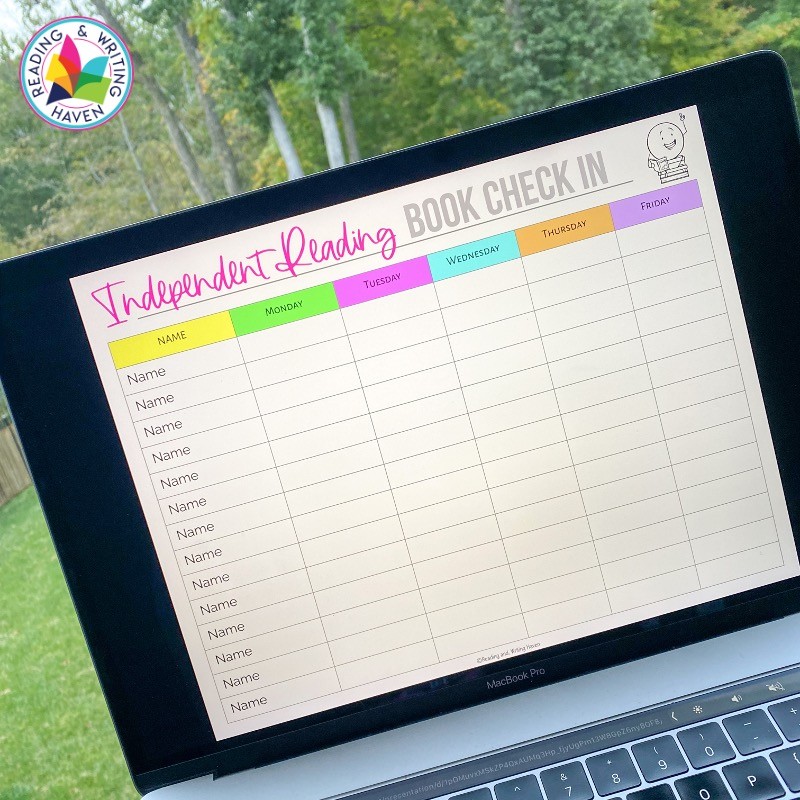
Notwithstanding, Pernille Ripp recommends a second option for reading checks, which is asking students to sign in at the beginning of each class by updating the electric current folio number of their independent reading book. Nosotros can streamline this process with a digital or impress whole class book check-in sail that tin can later on be analyzed for trends (pictured below).
At the end of a week or month, we can ask students to total the number of pages they have read and submit that number via a Google Form. This is data we can employ to reflect on as a class.
five: Coincidental Book TALKS
What are people typically really excited to do after reading something super good? Tell others, of class! That's why breezy book talks are an engaging style to open upward authentic social reading situations.
After independent reading time, ask for volunteers to share something exciting, moving, or humorous from what they've read, a favorite line or passage, or an impressive case of writer'due south style. I consider these informal book talks, just I don't recommend titling them every bit such to students because it increases the formality.
Just ask who wants to share, and let a few voices shine. To make certain everyone has an opportunity to participate, keep track of who has already shared. When you run out of volunteers and still accept students who oasis't shared, inquire them questions about their book.
"Jaclyn, I meet you are reading ___. What happened in your reading today?"
"Nathan, what'due south your favorite part of the volume you are currently reading?"
The expectation to share our reading is a gentle reminder to students:Yous demand to be reading. It will be your plough soon. This layer of accountability is ane I'm comfortable with because sharing good books is an authentic reading practice.
half dozen: READING SPRINTS
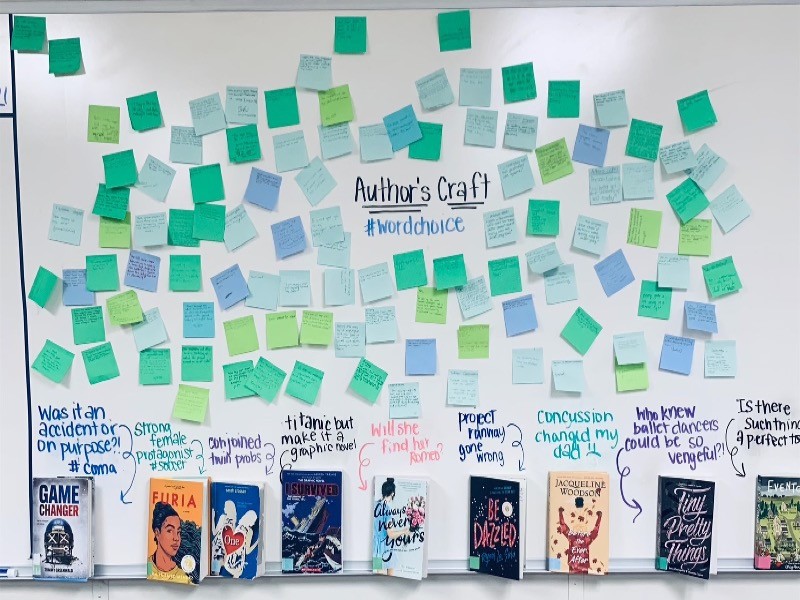
Here's another after-independent reading activity, and this one engages the whole grade! Reading sprints are when students answer a standards-aligned question about their book directly following reading time. They jot their thoughts on a sticky note and so share it on the lath.
Every bit a teacher, there are multiple ways nosotros can lead short or long on-the-spot discussions about literature skills using these sticky note collections. Students' responses to questions will give united states of america insights equally to what skills we need to hone.
Reading sprints keep the spirit of customs reading alive in our class and allow us to tie independent reading to whole-grade reading lessons seamlessly!
vii: READING RATE GOALS
In 180 Days, Kelly Gallagher and Penny Kittle recommend having students set their own reading goals based on their reading rates. To do this, have students read for ten minutes. They should record the page they begin on and the page they stop on. With that number, they will multiply by 6 to find the number of pages they tin can read per hour. Then, students should prepare a goal for the number of pages they want to read in a week.
Gallagher and Kittle suggest teachers could form students upon whether or not they see their self-adamant goal, but my own preference is to avoid grading with independent reading as much every bit possible. There have been plenty of times I oasis't met my ain goals for finishing a book or reading equally much as I should have in a month, and I've needed to give myself some grace.
Of course, text complexity plays a role in students' reading rates, and they need to exist taught to set up goals that are appropriate for the text they are reading. Students can besides fix goals for date, environment, stamina, and variety of reading.
8: FIRST PAGE SNEAK PEAKS
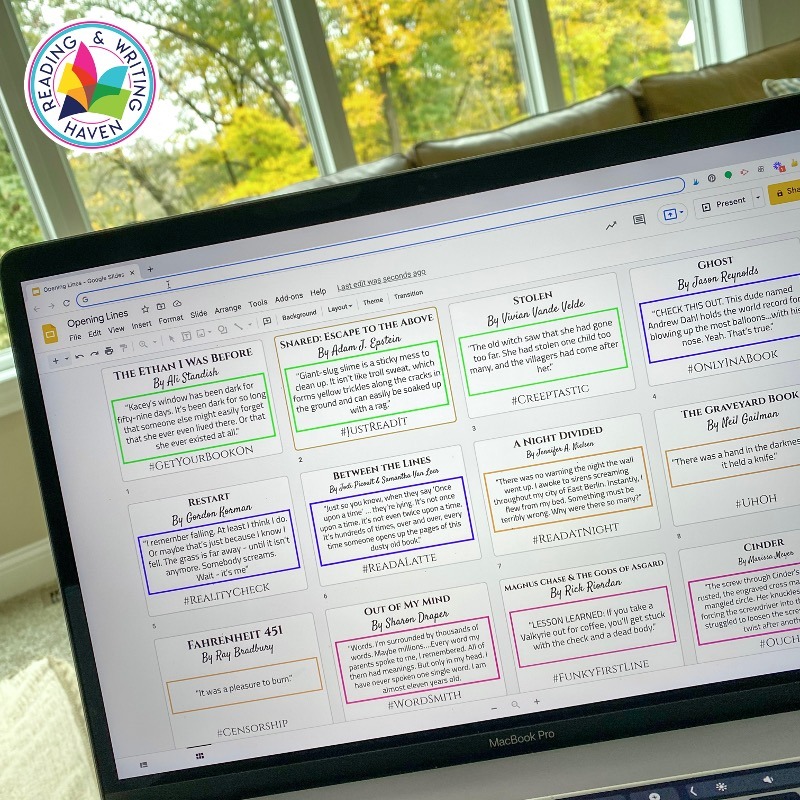
Hooking students on practiced books is the first footstep toward a thriving independent reading programme. Over the years, I've noticed the most engaging books often have high-involvement first pages.
So…let's take reward of some sneak peaks! Either with physical books or digitally, have students read the first page, record their thoughts, share their thinking with a small group.
This activity is not necessarily an alternative to a reading log, but information technology is excellent for building our "to read" lists and promoting a positive reading culture.
9: VIEWING PARTIES
Viewing parties accept recently become popular considering they enable groups of people to watch videos together even when they're apart. When it comes to independent reading, why non host trailer viewing parties? Students can enjoy the trailers equally they sit in our classrooms, or they tin can watch remotely.
Viewing parties are notwithstanding some other way to share amazing book recommendations with others. Students tin recommend book trailers they think their peers would enjoy, and teachers can generate book trailer lists based on weekly or monthly themes.
Why not host monthly viewing parties as a way to recap First Affiliate Friday books (hither'due south a list from a friend!) you take previewed or other excerpts you've shared? They're a friendly reminder that those books are still available for the reading!
Get new books on students' radar by finding authors who are reading excerpts from their own books. Or, invite authors on Twitter like Jennifer Nielson to host a virtual book reading or Q and A with your course.
10: GENRE EXPOSURE
I beginning began introducing literary genres slowly throughout the twelvemonth when I read The Book Whisperer years ago. Over time, I saw the value of this approach. While older students by and large already accept a specific taste for certain genres, exposing them to a diversity of them throughout the year helped students to expand their palettes.
Some specific ideas…
Introduce new genres with a brief ready of notes. (Yous can observe mine here.) Hash out mutual characteristics of that genre. Read excerpts from those genres…first pages, first chapters, high-interest passages, and dorsum covers. You tin also hold a genre sorting action to get more books in students' hands.
11: Collective READING WALLS
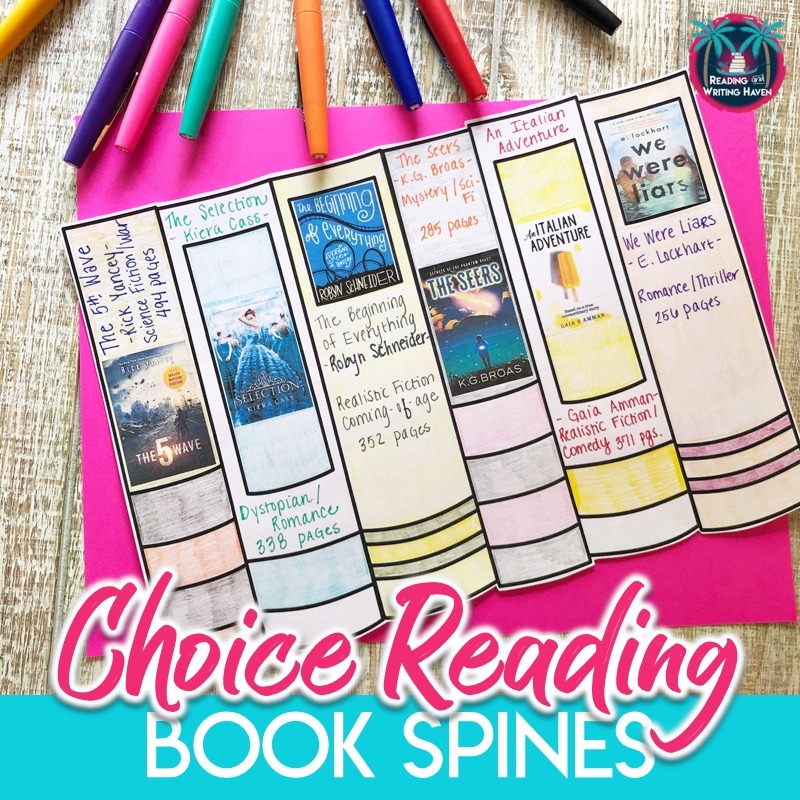
After students stop a volume, have them fill out a volume spine and add it to your classroom decor! This elementary action gives both teachers and students a visual for community reading volume. The trickiest part of using the book spine strategy is remembering to have students fill them out! And then, I recommend building in a regular space for this to happen.
Cull a day of the week, and write it into your lesson plans for that mean solar day! On a bi-weekly or monthly basis, requite students 5 to 10 minutes to complete their volume spines in class and add them to the wall if you want.
12: READING LADDERS
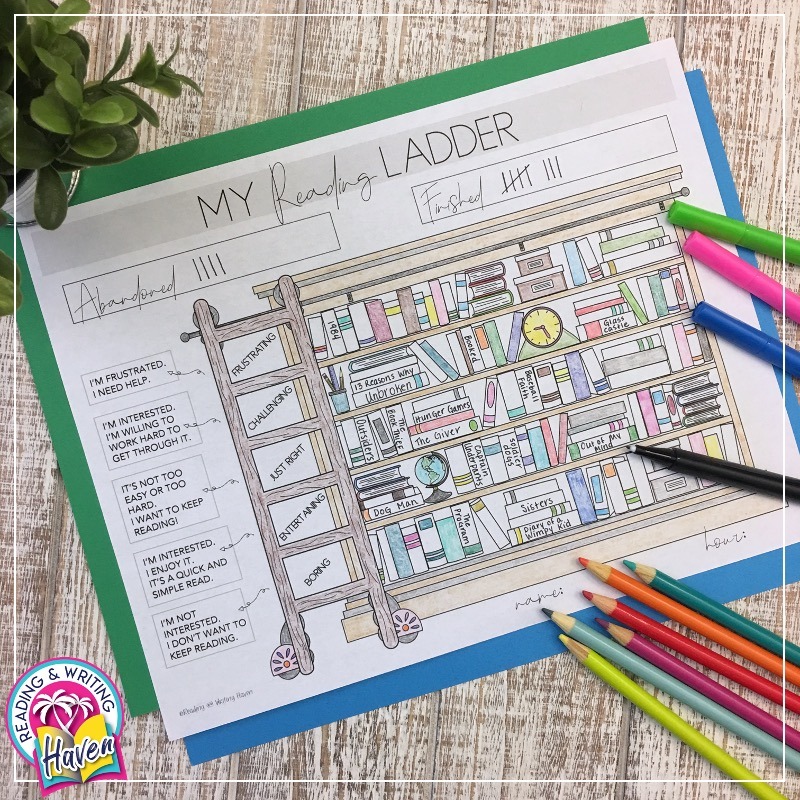
Reading ladders are my absolute favorite alternative to the reading log! They still let space for students to record what they've read. But they experience less intrusive. Plus, reading ladders are convenient for discussing book diet, reading volume, and reading identity.
With a reading ladder, you start with a bookshelf. And so, cull how you want to characterization each shelf. I often choose to label shelves with words like "merely right," "entertaining," "challenging," "like shooting fish in a barrel," and "frustrating." This labeling system helps readers to identify the complexity of books they are reading. Nosotros always talk over how it'south okay to read a picture volume that is like shooting fish in a barrel. And, information technology'due south okay to read a classic that is challenging! The cardinal is to know what you are reading and why.
Hither are my my impress and digital reading ladders.
13: READING DISPLAYS
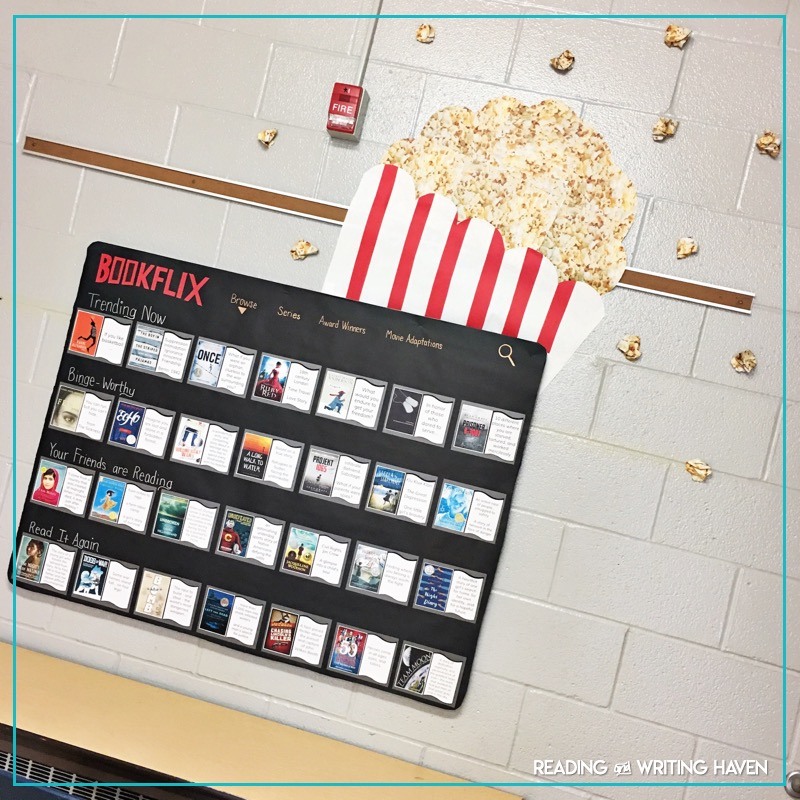
Some other style we tin can make reading a visible part of our classrooms is through academic displays. It'southward hard for students to forget almost reading when they are surrounded by high-interest novels! Reading displays are a non-invasive way to track collective reading.
Display novels y'all want to depict attending to at the front of your classroom or face-out on your library shelves. Consider having students contribute to a class bulletin board. Here are some academic bulletin lath ideas I've created using social media concepts.
fourteen: READING CHALLENGES
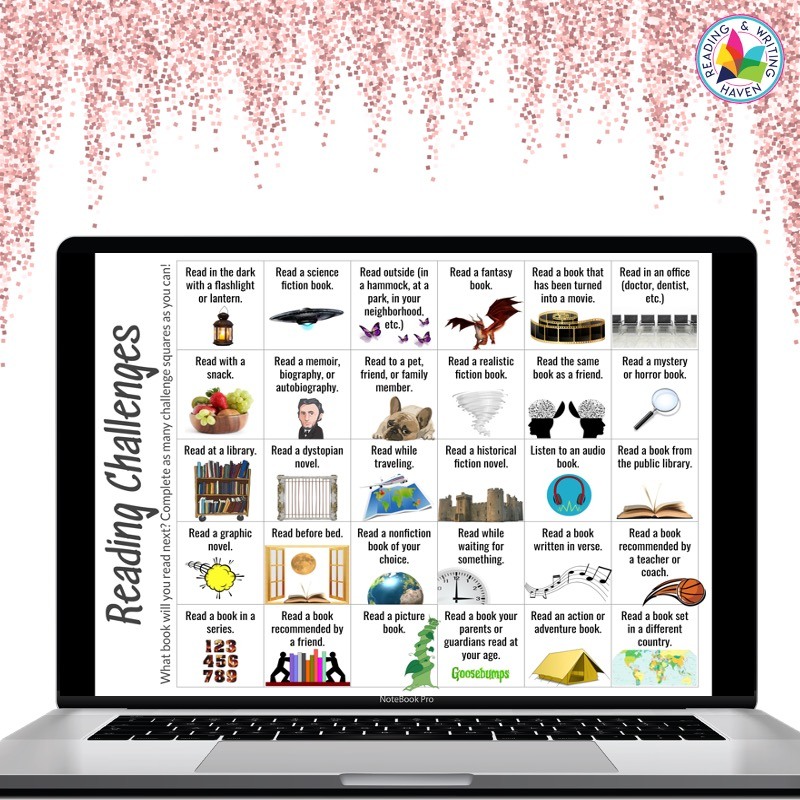
Appoint readers with challenges to get them reading more frequently! Endeavour challenges with unexpected twists. Read nether a homemade fort, in a hammock, or on vacation. Expand your genre diet past dipping your toes into something new. Recommend books to a friend or read something recommended past a jitney!
Format reading challenges into a tic-tac-toe choice board or BINGO lath and have them submit their titles whenever they finish a sure number of novels.
You can also work with students to create private or whole-class challenges to read a certain number of pages each week or month. Students can make full out a unproblematic Google Form at the finish of the time menstruum to point how many pages they read.
15: READING JOURNALS
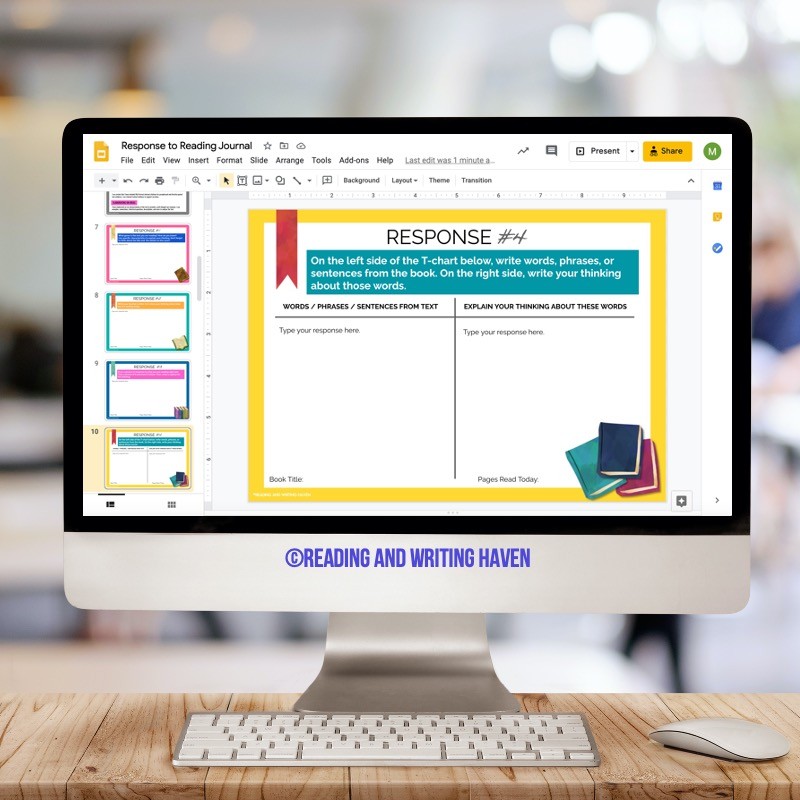
After reading, we can ask students to write virtually what they've read. Connecting reading and writing is a healthy habit that encourages reflection and creativity. When students see literature from an writer's point of view or when they approach their own writing to utilise the literature techniques they've analyzed, students are empowered!
Reading journals (whether recorded digitally or in a reader's notebook) are one way to build in standards-aligned accountability. We can hit both reading and writing standards! Here are 2 sets of writing journals you can utilise to get started with journaling most reading: Fix 1 and Set 2.
Want to prioritize the questions but cut the writing? Readers naturally discuss what they are reading with others! Promote a book guild type culture (even when students are all reading different books!) by keeping high-interest discussion prompts or more basic comprehension-style questions handy.
The Cardinal: Every skillful idea is only good in moderation.
As with reading logs, any and all of these tools could be used in a mode that negatively impacts our readers…including using them also often or treating them as "I gotchas." It's ongoing work and reflection to identify whether what we are asking of students is cartoon them closer to reading and further on their reading journeys or whether it is doing the opposite.
If we really want to know whether our students are reading, all nosotros demand information technology exercise is watch them. Are they devouring books? Sharing their favorite parts? Conveying books with them? Flipping pages with eyes tracking during independent reading time? These are authentic indications of reading. Best of all, they don't add anything to our plates, and they won't turn our readers away from books.
espinozamonsun1995.blogspot.com
Source: https://www.readingandwritinghaven.com/fun-ways-to-freshen-up-your-independent-reading-program

Post a Comment for "How to Make Reading Fun for High Schoolers"